learn python

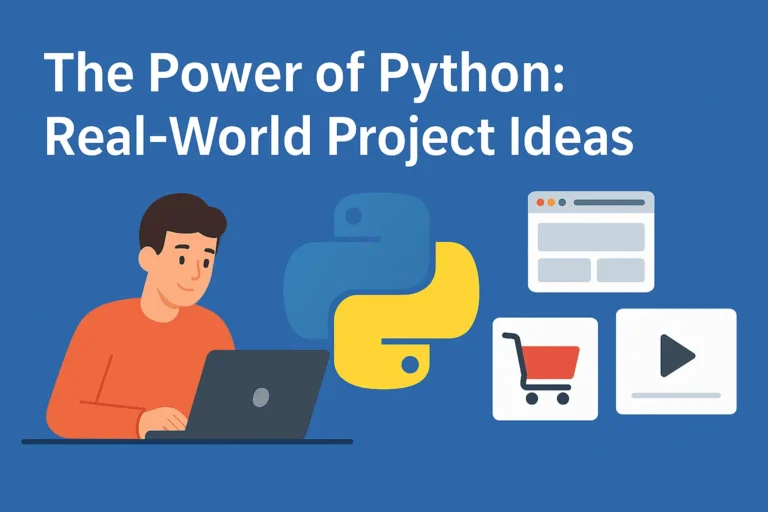
The Power of Python: Real-World Project Ideas illustrated with laptop, Python logo, and project icons.

The Power of Python: Real-World Project Ideas

When people ask why I love Python, my answer is simple: it’s not just a programming language, it’s a toolbox for turning my ideas into reality. Python is beginner-friendly, versatile, and powerful enough to run everything from a tiny script on your laptop to large-scale systems powering global companies. But here’s the catch: learning Python by just reading syntax or following tutorials can feel… incomplete. The real magic happens when you build real-time projects, things you can see, use, and maybe even share with others. Projects push you to connect concepts, face real challenges, and gain the confidence that you’re not just “learning Python,” you’re using it. So, let’s talk about some real-world project ideas you can start with, depending on your interests. Use FastAPI for real-time chat, and django is the best framework for other projects. 1. Email and file automation Repetitive tasks are the enemy of productivity. Luckily, Python is perfect for automating them. You’ll be surprised at how empowering it feels when your code saves you time in the real world. 2. Blog Website Every developer needs a place to share their thoughts, projects, and journey. Why not build your own blog? The bonus? You learn backend logic and how to make something visually appealing. Plus, it doubles as your portfolio. 3. E-Commerce with Payment Integration Imagine running your mini Amazon-style site built with Python! This type of project will expose you to real-world concepts like authentication, databases, and secure transactions, things every serious developer should know. 4. Social Media App Social media powers our world. Building even a simplified version teaches you so much. You don’t need to reinvent Instagram or Twitter. Even a basic version is a fantastic learning experience in how large-scale platforms actually work. 5. Real-Time Chat App with WebSockets Chat apps are a perfect introduction to real-time communication. It’s one of those projects that feels “alive” because you’re building something interactive. 6. Data Analysis & Visualization Python shines when it comes to working with data. This isn’t just coding—it’s storytelling with data. Use streamlit for data visualization. 7. Movie Recommendation System This one’s always a crowd pleaser. It’s a cool project because people can actually interact with it, and it’s a great intro to AI without being overwhelming. 8. Fun & Creative Projects Not every project has to be “serious.” Some of the best learning happens when you’re just having fun. Quirky projects often keep you motivated when the “serious” ones get too heavy. Final Thoughts Python is powerful not because it’s the fastest or most complex language, but because it’s accessible and opens doors to so many areas of automation, web, data, AI, and even fun side projects. The best advice I can give is this: start small, but start today. Pick one idea from the list above and build it. It doesn’t have to be perfect; in fact, it won’t be perfect. And that’s the point. Every project teaches you something new. Before long, you’ll have a portfolio that doesn’t just show code, it shows creativity, problem-solving. Let me know which project you’re creating.

The Power of Python: Real-World Project Ideas Read More »

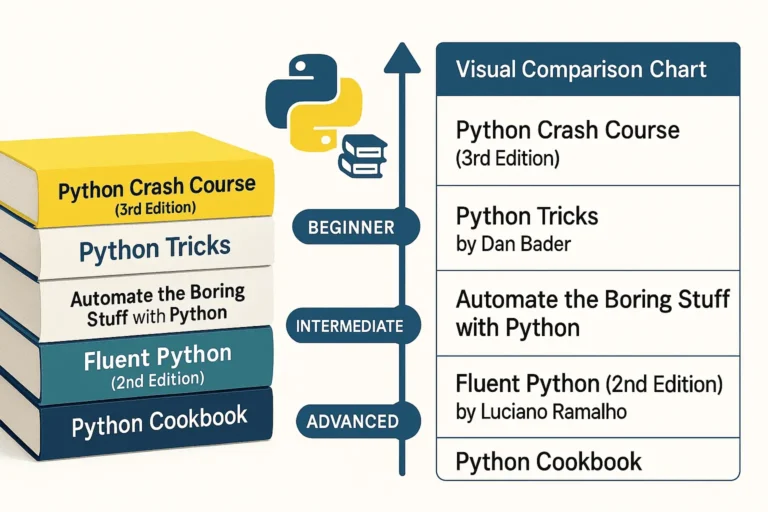
Five essential Python programming books stacked together - Python Crash Course, Python Tricks, Automate the Boring Stuff, Fluent Python, and Python Cookbook

5 Best Python Books for Beginners

Python has become one of the most popular programming languages in the world, and with good reason. To begin with, its clean syntax, versatility, and massive ecosystem make it perfect for everything from web development to data science to automation. Its wide range of applications attracts both beginners and professionals alike. Therefore, whether you are just starting your Python journey or looking to deepen your expertise, these five books offer invaluable insights and practical knowledge. 1. Python Crash Course (3rd Edition) by Eric Matthes Perfect for: Complete beginners and those wanting a comprehensive introduction Python Crash Course is widely regarded as one of the best introductory Python books available. The third edition keeps pace with modern Python development practices while maintaining its accessible approach. What makes it special: Who should read it: 2. Python Tricks by Dan Bader Perfect for: Intermediate developers wanting to write more Pythonic code Dan Bader’s Python Tricks bridges the gap between basic skills and pro-level code. In particular, it explains the “how” and “why” behind Python’s unique features, helping you write cleaner and smarter programs. What makes it special: Key areas covered: Who should read it: 3. Automate the Boring Stuff with Python by Al Sweigart Perfect for: Anyone who wants to use Python for practical automation This book takes a unique approach by focusing on practical automation tasks that can immediately improve your productivity, regardless of your profession. What makes it special: Skills you’ll gain: Who should read it: 4. Fluent Python (2nd Edition) by Luciano Ramalho Perfect for: Intermediate to advanced developers who want deep Python mastery Fluent Python is considered the definitive guide to writing effective, idiomatic Python code. In fact, the second edition has been updated for Python 3.10+ and includes new chapters on pattern matching as well as async programming. What makes it special: Advanced topics covered: Who should read it: 5. Python Cookbook (3rd Edition) by David Beazley and Brian K. Jones Perfect for: Experienced developers looking for solutions to specific problems The Python Cookbook is a recipe-based reference that provides solutions to common (and not-so-common) Python programming challenges. It’s designed to be a practical resource you’ll return to throughout your Python career. What makes it special: Key recipe categories: Who should read it: How to Choose the Right Book for Your Journey If you’re a complete beginner: Start with Python Crash Course. Its project-based approach will give you both foundational knowledge and practical experience. If you know the basics: Python Tricks will help you write more professional, Pythonic code, while Automate the Boring Stuff will show you immediate practical applications. If you’re ready for advanced topics: Fluent Python provides deep insights into Python’s design and advanced features, perfect for developers who want a mastery-level understanding. If you need a reference: Therefore, keep the Python Cookbook handy for specific solutions to programming challenges you’ll encounter in real projects. Building Your Python Library Consider building your Python book collection gradually: Final Thoughts Each of these books offers a unique perspective on Python programming. To begin with, the key is to choose books that match your current skill level and goals, and then apply what you learn through hands-on practice. After all, Python’s strength lies in its syntax and philosophy of clear, readable code—something these books will help you master. Moreover, whether you’re automating your daily tasks, building web applications, or diving deep into Python’s advanced features, these books provide the knowledge and insights you need to become a more effective Python developer. Ultimately, remember: the best Python book is the one you read and apply. Therefore, choose based on your goals, commit to working through the examples, and don’t be afraid to write lots of code along the way.

5 Best Python Books for Beginners Read More »

python programming

Python Cheat Sheet

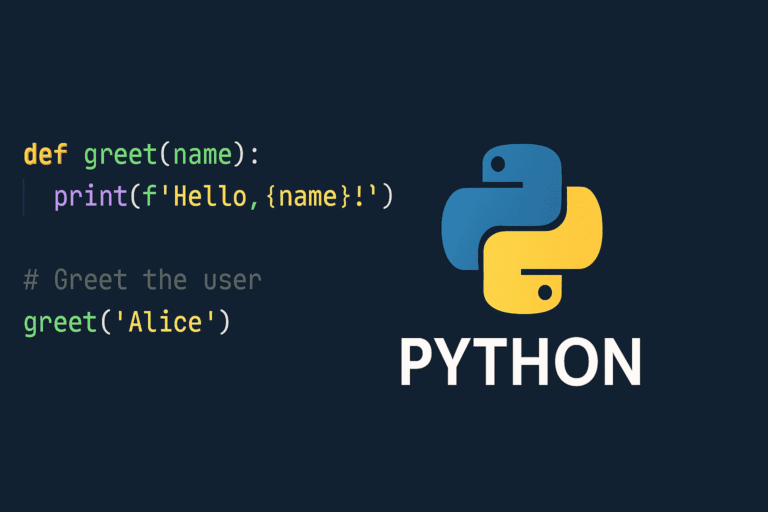
Whether you’re a beginner just starting with Python or a seasoned developer needing a quick refresher, this Python Cheat Sheet has you covered! This concise guide includes essential syntax, common functions, data structures, loops, conditionals, file handling, and more. Keep it handy while coding or studying to boost your productivity and confidence. Dive in and supercharge your Python skills with this all-in-one reference! Basic Syntax Python uses clean, readable syntax without semicolons or curly braces. Indentation matters – it defines code blocks! Variables and Data Types Python is dynamically typed – you don’t need to declare variable types. Just assign and go! # Variables (no declaration needed) name = “Alice” age = 25 height = 5.6 is_student = True # Data types str_var = “Hello” # String int_var = 42 # Integer float_var = 3.14 # Float bool_var = True # Boolean list_var = [1, 2, 3] # List tuple_var = (1, 2, 3) # Tuple dict_var = {“key”: “value”} # Dictionary set_var = {1, 2, 3} # Set Control Structures These are the building blocks that control how your program flows and makes decisions. If Statements Make your program smart by adding decision-making logic. if age >= 18: print(“Adult”) elif age >= 13: print(“Teenager”) else: print(“Child”) Loops Automate repetitive tasks – let Python do the boring work for you! # For loop for i in range(5): print(i) for item in [1, 2, 3]: print(item) # While loop count = 0 while count < 5: print(count) count += 1 Data Structures Python’s built-in containers for organizing and storing your data efficiently. Lists The Swiss Army knife of Python data structures – ordered, changeable, and versatile. # Creating and modifying lst = [1, 2, 3, 4, 5] lst.append(6) # Add to end lst.insert(0, 0) # Insert at index lst.remove(3) # Remove first occurrence lst.pop() # Remove last item lst[0] = 10 # Change item len(lst) # Length Dictionaries Key-value pairs that let you store and retrieve data like a real-world dictionary. # Creating and accessing person = {“name”: “Alice”, “age”: 25} person[“name”] # Access value person[“city”] = “NYC” # Add new key-value del person[“age”] # Delete key person.keys() # Get all keys person.values() # Get all values person.get(“name”, “Unknown”) # Safe access Sets Collections of unique items – perfect when you need to eliminate duplicates or check membership. # Creating and operations s1 = {1, 2, 3, 4} s2 = {3, 4, 5, 6} s1.add(5) # Add element s1.remove(1) # Remove element s1 & s2 # Intersection s1 | s2 # Union s1 – s2 # Difference Functions Write reusable code blocks that make your programs modular and easier to maintain. Basic Functions Define once, use everywhere – functions are your best friend for organized code. def greet(name, greeting=”Hello”): return f”{greeting}, {name}!” def add_numbers(*args): return sum(args) def person_info(**kwargs): for key, value in kwargs.items(): print(f”{key}: {value}”) # Lambda functions square = lambda x: x**2 List Comprehensions Python’s elegant way to create lists in a single line – concise and powerful! # Basic list comprehension squares = [x**2 for x in range(10)] # With condition evens = [x for x in range(20) if x % 2 == 0] # Dictionary comprehension square_dict = {x: x**2 for x in range(5)} # Set comprehension unique_chars = {char for char in “hello world”} String Operations Text manipulation made easy – Python treats strings like first-class citizens. File Operations Read from and write to files – your gateway to persistent data storage. # Reading files with open(“file.txt”, “r”) as f: content = f.read() lines = f.readlines() # Writing files with open(“file.txt”, “w”) as f: f.write(“Hello World”) f.writelines([“Line 1\n”, “Line 2\n”]) Exception Handling Handle errors gracefully – because things don’t always go as planned! try: result = 10 / 0 except ZeroDivisionError: print(“Cannot divide by zero”) except Exception as e: print(f”An error occurred: {e}”) else: print(“No errors occurred”) finally: print(“This always executes”) Classes and Objects Object-oriented programming in Python – create your custom data types and behaviors. class Person: def __init__(self, name, age): self.name = name self.age = age def greet(self): return f”Hi, I’m {self.name}” def __str__(self): return f”Person(name='{self.name}’, age={self.age})” # Usage person = Person(“Alice”, 25) print(person.greet()) Common Built-in Functions Python’s toolbox of ready-to-use functions that save you time and effort. # Math functions abs(-5) # Absolute value min(1, 2, 3) # Minimum max(1, 2, 3) # Maximum sum([1, 2, 3]) # Sum of iterable round(3.14159, 2) # Round to 2 decimals # Type functions type(42) # Get type isinstance(42, int) # Check type len([1, 2, 3]) # Length # Iteration functions enumerate([1, 2, 3]) # Returns (index, value) pairs zip([1, 2], [‘a’, ‘b’]) # Combine iterables reversed([1, 2, 3]) # Reverse iterator sorted([3, 1, 2]) # Return sorted list Import and Modules Extend Python’s capabilities by using libraries – standing on the shoulders of giants! import math from math import pi, sqrt import numpy as np from datetime import datetime, timedelta # Using imports math.sqrt(16) pi np.array([1, 2, 3]) datetime.now() Common Patterns Real-world examples of frequently used Python patterns that every developer should know. Working with the Os module Files and Directories Navigate and manipulate your file system like a pro. import os os.listdir(‘.’) # List directory contents os.path.exists(‘file.txt’) # Check if file exists os.path.join(‘folder’, ‘file.txt’) # Join paths Date and Time Work with dates and times – essential for logging, scheduling, and data analysis. from datetime import datetime, timedelta now = datetime.now() tomorrow = now + timedelta(days=1) formatted = now.strftime(‘%Y-%m-%d %H:%M:%S’) Regular Expressions Pattern matching and text processing – powerful tools for working with strings. import re pattern = r’\d+’ # Match digits re.findall(pattern, “I have 5 apples and 3 oranges”) re.search(pattern, “Age: 25”) re.sub(r’\d+’, ‘X’, “I have 5 apples”) # Replace Useful Tips Pro tips and Python idioms that will make you more productive and your code more Pythonic. Please download the Full PDF.

Python Cheat Sheet Read More »

Scroll to Top