data science

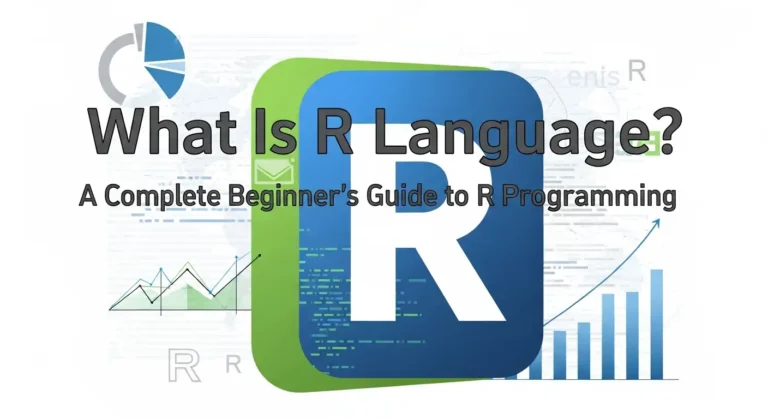
What Is R Language

What is R Language?

I was wondering, every time I learned a data science course, I saw R. But today I learned about it, and I will give you a simple guide on what the R language is and why it is fast and popular in data science and machine learning. If you are stepping into the world of data science, analytics, or statistics, you have probably heard about the R language. But what exactly is R, and why is it so popular among data professionals? In simple words, R is a programming language used for data analysis, statistical computing, and data visualization. It helps you work with data, find patterns, and present insights in a clear and meaningful way. In this guide, you will learn what the R language is, its features, uses, and why you should consider learning it. R Language? R is an open-source programming language specifically designed for data analysis and statistics. Unlike general-purpose languages, R focuses on handling data efficiently and performing complex calculations with ease. You can use R to: It is widely used by data scientists, researchers, analysts, and businesses around the world. History of the R Programming Language R was developed in the early 1990s by two statisticians who wanted a free and powerful tool for data analysis. Their goal was to make statistical computing accessible to everyone. Today, R has evolved into one of the most widely used tools in data science, supported by a strong global community. Key Features of R Language 1. Open Source and Free R is completely free to use. You can download and start using it without any cost. 2. Powerful Data Analysis R provides built-in functions and libraries that make data manipulation and statistical analysis easier. 3. Excellent Data Visualization R allows you to create high-quality graphs and charts that help in understanding data better. 4. Large Package Ecosystem R has thousands of packages that extend its capabilities for different types of analysis. 5. Strong Community Support A large community of developers continuously contributes to improving R and creating new tools. Uses of the R Language R is used in multiple industries and domains. Some common use cases include: Advantages of R Language Disadvantages of R Language Simple Example in R This example shows how easily you can calculate the average of a dataset using R. R vs Python for Data Science Both R and Python are popular in data science. If your focus is data analysis, R is a great choice. Why Should You Learn R Language? Learning R can help you: Conclusion R language is a powerful Programming Language for anyone interested in data analysis and statistics. It simplifies complex calculations, helps visualize data, and allows you to gain valuable insights.

What is R Language? Read More »

Data Science Courses

Top 5 Data Science Courses in India for 2026

Data Science and Artificial Intelligence are among the most in-demand skills today. Many top Indian institutes now offer online programs that allow students and working professionals to learn these skills without leaving their jobs. In 2026, make it your goal to start a data science course and earn a salary between ₹8 LPA and ₹40 LPA. Here are the top 5 Data Science courses in India for 2026, explained in simple words, along with fees and duration. 1. IIT Delhi – Certificate Programme in Data Science & Machine Learning Duration: 6 monthsMode: Online live classesFees: ₹1.25 – ₹1.50 lakh + GST Apply Now Simple explanation:This course is good for people who want to start or grow their career in data science. You will learn how to work with data using Python, understand statistics, and build machine learning models. The course also introduces Generative AI. Classes are taken live by IIT Delhi faculty, and you work on real-life projects. Best for: 2. IIT Madras – Diploma in Data Science Duration: Around 8 monthsMode: OnlineFees: Modular (pay per course; flexible total cost) Simple explanation:This is a diploma-level program where you pay for each subject separately. You can study at your own pace. The course teaches programming, statistics, and machine learning step by step. It is flexible and suitable for students as well as working professionals. Apply Now Best for: 3. IIT Roorkee – PG Certificate in Data Science, Machine Learning & Generative AI Duration: About 8 monthsMode: Online (live + recorded)Fees: Around ₹1.49 lakh Simple explanation:This is a slightly advanced course that goes deeper into machine learning and Generative AI. You will learn how AI models work, how to handle large data, and how to build real projects from start to end. It is more detailed than short courses and includes a final capstone project. Best for: 4. IIT Kanpur (E&ICT Academy) – Professional Certificate in Generative AI & Machine Learning Duration: About 11 monthsMode: OnlineFees: Around ₹1.53 lakh Simple explanation:This course focuses strongly on AI, especially Generative AI, NLP, and computer vision. The longer duration gives you more time to practice coding and projects. You will learn how AI models are trained and used in real products like chatbots and image systems. Read More Best for: 5. IIM Kozhikode – Professional Certificate in Data Science & Artificial Intelligence Duration: About 8 monthsMode: OnlineFees: ₹1.79 – ₹2.15 lakh + GST Simple explanation:This course is designed for managers and business professionals. It explains data science in a way that helps you make better business decisions. You will learn what data science can do for companies, even if you are not a hardcore coder. Technical concepts are explained in a business-friendly way. See MoreDetail Best for:

Top 5 Data Science Courses in India for 2026 Read More »

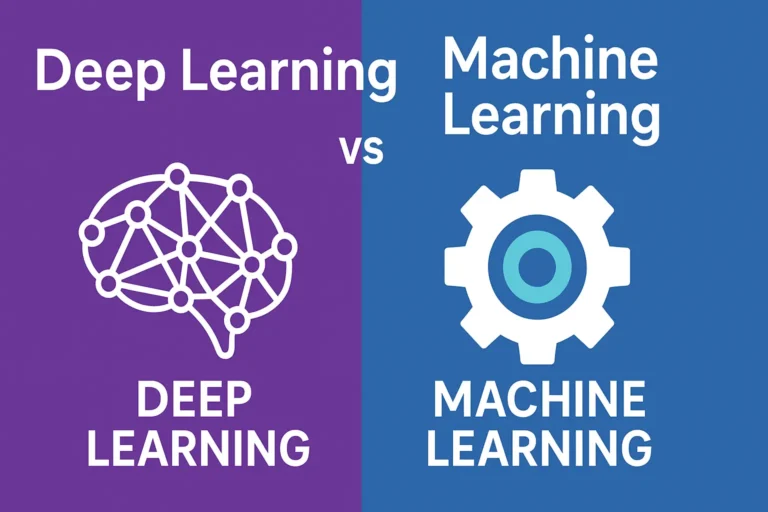
Infographic comparing Deep Learning and Machine Learning with icons of a brain and a gear, highlighting the differences between the two AI approaches

Deep Learning vs Machine Learning: Key Differences You Must Know

Are you usually confused about the difference between deep learning and machine learning? You’re not alone! These terms are frequently used interchangeably, but they are not the same. Understanding the distinctions is essential whether you’re a beginner stepping into AI or a professional aiming to sharpen your expertise. Let’s break it down everything you need to know about deep learning vs machine learning in clear, simple terms. What is Machine Learning? Machine learning is essentially about teaching a computer to recognize patterns in data without explicitly coding every rule. Think of it as showing a child hundreds of pictures of cats and dogs until they can figure out which is which on their own. Key characteristics of machine learning: Types of Machine Learning What is Deep Learning? Deep learning is a subset of machine learning, but it takes inspiration from how the human brain works. It uses artificial neural networks with many layers (hence the word “deep”) to process information. Imagine how your brain processes visual input. It passes through multiple layers of neurons, each detecting different features. Deep learning functions in a very similar way. Key characteristics of deep learning: Deep Learning vs Machine Learning: The Core Differences 1. Data Requirements 2. Feature Engineering 3. Hardware Requirements 4. Interpretability 5. Training Time When to Use Machine Learning vs Deep Learning Choose Machine Learning When: Choose Deep Learning When: Real-World Applications Machine Learning Examples: Deep Learning Examples: The Performance Factor Here’s an important insight: machine learning often outperforms deep learning on smaller datasets. But as the data gets bigger, deep learning tends to take the lead. Think of it like this: Getting Started: Which Path Should You Take? If you’re just beginning your journey in AI, start with machine learning first. Here’s why: Once you’re comfortable, you can dive into deep learning with confidence. Future Trends: What’s Next? The boundary between machine learning and deep learning continues to blur. Some exciting trends include: Conclusion Both machine learning and deep learning play vital roles in the AI landscape. The right choice depends on your data, resources, and goals. The key is to define your problem clearly before picking a tool. Don’t fall into the trap of using deep learning just because it’s trendy sometimes the simplest machine learning algorithm is exactly what you need. So, what’s your experience with machine learning vs deep learning? Have you found one more effective in your projects? Share your thoughts, I’d love to hear them!

Deep Learning vs Machine Learning: Key Differences You Must Know Read More »

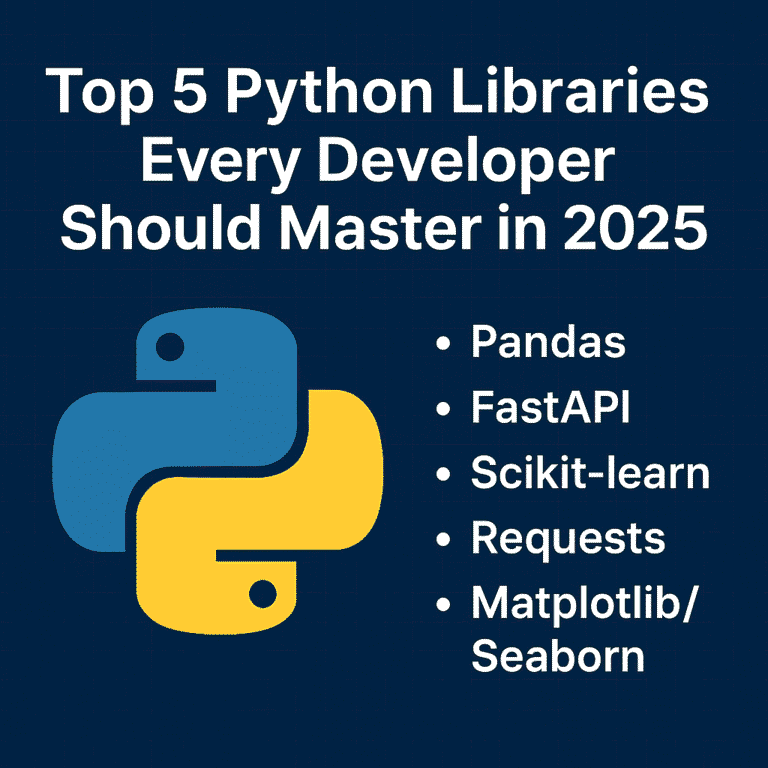
Top 5 Python libraries every developer should master in 2025

Top 5 Python Libraries Every Developer Should Master in 2025

As we move further into 2025, Python continues to be one of the most popular programming languages in the world. Its clean syntax, vibrant community, and powerful libraries make it a favorite among industry developers—from web development and data science to AI, automation, and beyond. But Python’s true strength lies in its ecosystem. With the right libraries, you can do more with less code—faster, cleaner, and more efficiently. Whether you’re just starting your Python journey or looking to sharpen your existing skills, here are five essential libraries every Python developer should know this year. 1. Pandas – Your Go-To Tool for Data Manipulation In today’s data-driven world, knowing how to work with data is a must—and Pandas makes it easy. It’s the standard library for handling structured data in Python and is widely used in fields like data science, finance, web development, and machine learning. Why Learn Pandas: Real-world uses: Data analysis, reporting dashboards, cleaning raw datasets, and even feeding machine learning models. 2. FastAPI – The New Standard for Building APIs FastAPI is quickly becoming the framework for building modern web APIs in Python. It’s fast (really fast), easy to use, and comes with automatic documentation out of the box. Why Developers Love FastAPI: Why it matters in 2025: More and more apps are going API-first. FastAPI helps you build scalable, production-ready APIs that integrate easily with frontend and mobile apps. 3. Scikit-learn – Machine Learning Made Simple Scikit-learn is the perfect place to start if you’re curious about machine learning. It abstracts away the complexity of ML algorithms and provides a consistent interface for quickly trying things. What You Can Do with It: Why learn it: Even if you’re not a full-time data scientist, understanding ML basics can give your apps a smarter edge. 4. Requests – The Simplest Way to Talk to the Web Every app these days needs to fetch or send data from somewhere—APIs, websites, services. The requests The library makes working with HTTP super simple and intuitive. Why Requests are a Must-Have: Use Cases: Calling external APIs (like weather, payment, or social media), scraping data, automating web interactions, or even testing your backend services. 5. Matplotlib & Seaborn – Visualize Like a Pro Data is only useful when you can understand and communicate it. That’s where Matplotlib and Seaborn come in. Learn to: Why it’s essential: Visualization helps you (and others) make better decisions based on your data. Whether it’s a report for your boss or a dashboard for your users, good visuals matter. Bringing It All Together These five libraries cover the entire journey of modern Python development: Mastering this toolkit gives you the power to build full-stack data-driven applications, from scratch to production. How to Start Learning (A 10-Week Roadmap) Here’s a simple plan you can follow: Conclusion The Python ecosystem is vast, but you don’t need to learn everything. These five libraries form a solid foundation that will serve you in almost every tech role—whether you’re building apps, analyzing data, or exploring AI. Start with one library and build something small. If you want to combine all of these, consider using the Streamlit library to quickly build dashboards. Keep going—the skills you develop now will open doors throughout your career. Follow my Streamlit blog.

Top 5 Python Libraries Every Developer Should Master in 2025 Read More »

Scroll to Top