Software development

demo project netflix

Can Google Antigravity Replace a Junior Developer?

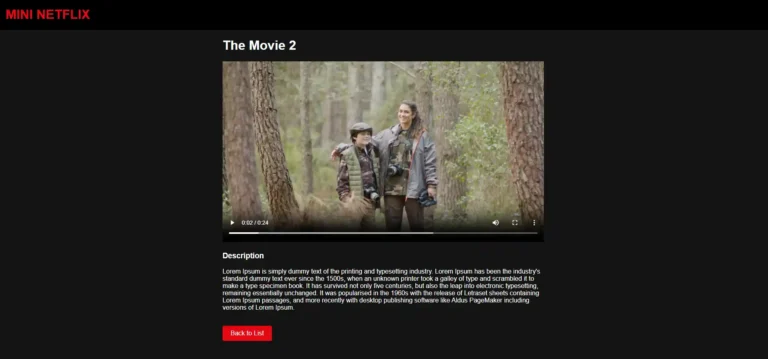
I recently built a Netflix clone without writing most of the code myself. Before you close this tab thinking I’m advocating for replacing human developers, hear me out. This experience with Google Antigravity taught me something nuanced about AI development tools and the future of junior developers. My Experiment: Building Without Coding Using Google Antigravity, I created a functional Netflix clone complete with a Django backend and a Simple frontend. I simply prompted Antigravity to add apps in Django, generate the frontend components, handle the backend logic, and tie everything together. The result? A working application that would have taken me an hour to build manually was ready in just 5 minutes. So, Can Google Antigravity Replace Junior Developers? The short answer: No, but it’s complicated. Here’s what I learned from this experiment: What Google Antigravity Excels At First, you need to grant permission for him to control the Chrome browser and the terminal. Even if you provide a token, he will be able to push code to the GitHub repository by himself. Speed and boilerplate generation. Antigravity churned out repetitive code, set up project structures, and handled standard CRUD operations faster than any human could. It’s like having a junior developer who never gets tired of writing the same patterns. Pattern recognition. Need a login system? Authentication middleware? Antigravity has seen thousands of implementations and can generate one that follows best practices instantly. Syntax and framework knowledge. The tool knew Django conventions, React patterns, and CSS frameworks without needing to Google documentation every five minutes. What Google Antigravity Struggles With When dealing with complex logic involving multiple apps and API integrations, he has to dry-run the process multiple times to fix issues. Sometimes, this takes too much time for a solution that a human could implement quickly. Debugging complex issues. When things broke in unexpected ways, the AI often suggested generic fixes. Real problem-solving requires human intuition and understanding of how different parts of the system interact. Architecture decisions. Should this be a microservice? How should we structure the database for future scaling? These strategic decisions still need human judgment. Context and trade-offs. The AI doesn’t know your team’s coding standards, your company’s technical debt, or why certain “bad” solutions might actually be the right choice given real-world constraints. The Real Question: What Does This Mean for Junior Developers? Rather than asking “will AI replace junior developers,” we should ask “how will junior developer roles evolve?” Junior Developers Who Will Struggle If your value proposition is purely “I can write boilerplate code and implement straightforward features,” then yes, AI is coming for that work. Typing speed and memorizing syntax were never sustainable differentiators. Junior Developers Who Will Thrive The junior developers who will succeed are those who: My Take: AI as a Force Multiplier After building my Netflix clone, I don’t see AI as a replacement for junior developers. I see it as a tool that raises the bar for what “junior” means. In the past, a junior developer spent months learning syntax, framework basics, and how to set up projects. Now, AI handles much of that grunt work. This means junior developers can (and must) focus on higher-level skills earlier in their careers. The junior developer of the future isn’t someone who can slowly implement a feature spec. It’s someone who can: Conclusion Can AI coding assistants replace a junior developer? Only if that junior developer refuses to evolve. The real opportunity is for junior developers to embrace these tools, level up faster, and focus on the irreplaceable human skills that make great developers great. The Netflix clone I built proves that AI can generate code. But it also proved that without human judgment, context, and problem-solving, code is just a starting point, not a solution. The question isn’t whether AI will replace junior developers. It’s whether junior developers will learn to make AI their superpower.

Can Google Antigravity Replace a Junior Developer? Read More »

The Power of Python: Real-World Project Ideas illustrated with laptop, Python logo, and project icons.

The Power of Python: Real-World Project Ideas

When people ask why I love Python, my answer is simple: it’s not just a programming language, it’s a toolbox for turning my ideas into reality. Python is beginner-friendly, versatile, and powerful enough to run everything from a tiny script on your laptop to large-scale systems powering global companies. But here’s the catch: learning Python by just reading syntax or following tutorials can feel… incomplete. The real magic happens when you build real-time projects, things you can see, use, and maybe even share with others. Projects push you to connect concepts, face real challenges, and gain the confidence that you’re not just “learning Python,” you’re using it. So, let’s talk about some real-world project ideas you can start with, depending on your interests. Use FastAPI for real-time chat, and django is the best framework for other projects. 1. Email and file automation Repetitive tasks are the enemy of productivity. Luckily, Python is perfect for automating them. You’ll be surprised at how empowering it feels when your code saves you time in the real world. 2. Blog Website Every developer needs a place to share their thoughts, projects, and journey. Why not build your own blog? The bonus? You learn backend logic and how to make something visually appealing. Plus, it doubles as your portfolio. 3. E-Commerce with Payment Integration Imagine running your mini Amazon-style site built with Python! This type of project will expose you to real-world concepts like authentication, databases, and secure transactions, things every serious developer should know. 4. Social Media App Social media powers our world. Building even a simplified version teaches you so much. You don’t need to reinvent Instagram or Twitter. Even a basic version is a fantastic learning experience in how large-scale platforms actually work. 5. Real-Time Chat App with WebSockets Chat apps are a perfect introduction to real-time communication. It’s one of those projects that feels “alive” because you’re building something interactive. 6. Data Analysis & Visualization Python shines when it comes to working with data. This isn’t just coding—it’s storytelling with data. Use streamlit for data visualization. 7. Movie Recommendation System This one’s always a crowd pleaser. It’s a cool project because people can actually interact with it, and it’s a great intro to AI without being overwhelming. 8. Fun & Creative Projects Not every project has to be “serious.” Some of the best learning happens when you’re just having fun. Quirky projects often keep you motivated when the “serious” ones get too heavy. Final Thoughts Python is powerful not because it’s the fastest or most complex language, but because it’s accessible and opens doors to so many areas of automation, web, data, AI, and even fun side projects. The best advice I can give is this: start small, but start today. Pick one idea from the list above and build it. It doesn’t have to be perfect; in fact, it won’t be perfect. And that’s the point. Every project teaches you something new. Before long, you’ll have a portfolio that doesn’t just show code, it shows creativity, problem-solving. Let me know which project you’re creating.

The Power of Python: Real-World Project Ideas Read More »

Scroll to Top